
27 October 2010

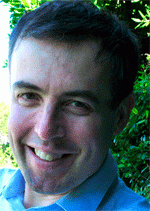
An Interview With Kerry Popplewell

Kerry Popplewell has lived in Ngaio, Wellington, with her husband Bruce for many years in a house that looks over to the hills running south from Mount Kaukau; it gets all of the sun and most of the wind. They have two adult children and more grandchildren than they ever anticipated, though the only other permanent residents aat the moment are a large black Labrador called Louis and a Burmese cat called Bailey - both 'hand-me-ups' from one of their children. (Their home has always had cat(s) or dog(s) or some combination of both.)

Born near the end of 1940, Kerry spent the war years with her mother at her grandmother's home in Pahiatua. When her father returned from the Pacific theatre, the family moved to Napier where she grew up. She still feels a real connection with Hawke's Bay, especially with the Kaweka and Ruahine ranges where she and her husband have often tramped. Both her parents were teachers, her father Jim Reidy being the first principal of Colenso High School. She thinks teaching must be a form of hereditary insanity since, having gained an MA in English at VUW and studied at the University of Chicago, she returned to lecture in English for nearly ten years before resigning to care for her children; and, once they started school, she taught Mathematics as well as English at Onslow College for fifteen years.

In 1995 she took a year's leave without pay, travelled overseas for some months and decided to retire early. It was then she started to write poems: "I'd always meant to be a poet but it took me a while to realise that to be one you had to complete poems!" Several courses she took at the International Institute of Modern Letters helped her start to do so.

Leaving The Tableland was launched in May 2010. I think that was the best-attended book launch I've been to - there must have been over 100 people there. For those who were not present, what led you to choose that particular venue, and what made it such a success?

I thought that if I were to have a launch, I'd like it to be a party for friends as well - and, as many of those we know well are trampers, the choice of the Tararua Tramping Club hall seemed fitting. One of my friends suggested it, possibly in jest, and I thought 'Why not?' It felt good being in a familiar place, even if the absence of an oven meant we had to buy a small portable one for $8 on Trade Me to heat the pastries! Roger Steele, my publisher, said he'd never had a launch in a tramping club hall before but he got keen on the idea and insisted we heat cheerios in a billy over a primus.


Do your work on your poetry in your head as you walk, or are the two - writing poetry and tramping - quite separate activities?

Mostly separate, though I do remember composing a haiku climbing up a ridge above Gollan's Valley. Odd phrases, rhythms or ideas may come to me tramping but as for a poem, I need - literally - to have a pen in hand. But of course the places I tramp in and the experiences I have in the mountains provide material for my poems - as do all the other facets of my life, be it family, friends or faith.

If it isn't an indelicate question, when did you first think of putting a collection of your poetry together?

Hmm. The really indelicate question would be asking why it took me so long to do so! Right from around 1996 when I started not just to write but also to submit poems for publication I thought I'd get round to collecting them sometime.

Was the path from initial idea to published collection straightforward?

No, but mostly because of my advanced skills in procrastination. Then, in 2006, a friend suggested I apply for one of the Manuscript Assessment Awards the New Zealand Society of Authors offer each year. I was fortunate enough to be given one and even more fortunate in getting James Norcliffe as my assessor. After all the detailed advice he gave me, I felt I really had to get moving. Even so, it was probably a year after Roger Steele agreed to take on my book that the collection came out - I needed to do a good deal more work on it myself.

You taught for many years. Was teaching something that helped or hindered your poetry - or is that too simplistic a question?

In my case, I think 'hindered' as teaching, no matter the subject matter or level, will absorb every bit of time and creative energy you are prepared to give it. But then teaching was something I truly enjoyed, so I'm not consumed with regret for all those unwritten poems! Other poets are able to combine writing and teaching very successfully.

Did a particular person inspire you to start writing poetry?

I think the poets I read did that - but certainly Helen Hill, the teacher to whose memory my collection is dedicated, encouraged my own efforts. I must have been a trial to her in some ways, pestering her to read the whole of Shelley's "Ode to the West Wind" and "Lycidas" to our fourth form (Year 10) English class. Later I appreciated her reluctance! Helen Hill was also responsible for introducing me to tramping so she certainly had a big influence on my life.

Which poets do you feel have had the most influence on your own work?

Keats truly floored me when I was 14 - not only was I going to be a poet, I was sure I too would die at 25. A year or so later, it was Hopkins who had me giddy on words and rhythm. Then, in my MA year, Joan Stevens introduced us to Philip Larkin and if I had to single out one poet whose work has almost surely influenced mine, it would be him; but then, behind Larkin as it were, is Wordsworth whose attraction for me grew slowly but surely. On the other hand, the poet on whose work I intended to do my doctoral dissertation (something I never quite got round to!) was the Orkney poet, Edwin Muir. Of course there are all the other poets whom I have at one time or another 'discovered' - Edward Thomas, Dickinson, Auden, Herbert - not to mention New Zealand poets from Bethell to Bill Manhire. I'd find it hard to say though whether or not they've influenced my own work in a particular way.

Has having a book published changed how you feel about the role of poetry in your life?

Not really. Though I'd like to think I might become more disciplined in setting aside time to write and more diligent in sending work off for publication. I remember Elizabeth Smither at a workshop some years ago advising us to 'Send Something Somewhere' every month - I wish I did.

Now that Leaving The Tableland has been published, do you have another collection, or some other writing project, under way?

Well, I'm probably at least a third of the way towards having enough poems for a second collection - very few of the poems in Leaving the Tableland were written after 2005 and they've slowly been accumulating since then. Also, because I left it so long to get out a book, there were a number of other poems I'd like to have included but couldn't. I recall Roger Steele saying that a volume the size I'd had in mind was "a little immodest for a first collection". I'm sure he was right. (He was kind enough to suggest I could save some of them for next time!)

Book Availability

Kerry's collection Leaving the Tableland is published by Steele Roberts (2010) and available from the publisher or in selected bookshops for $19.99 (RRP).

A poem from Leaving the Tableland, Take me back to the Bay, was my Tuesday Poem this week.

25 October 2010

Tuesday Poem: Take me back to the Bay, by Kerry Popplewell

Take me back to the Bay

1

Take me back to the Bay,
back to the Sixties too —
when what was to come
was certain to be
as bright and wide as the sea.

2

Dust tastes concrete-white;
feet flinch on riverbed and beach.
Heat haze deletes the hills.

Mushrooms erupt in damp paddocks
alongside the distraction of blackberry,
the leaf shoals on shingle roads.

There's a nip in late afternoon air,
snow on Kaweka. In August
bare willows burn orange.

Pink and tentative, flowers
put out feelers on fruit trees,
querying their cue.

Tim says:

"Take me back to the Bay" is reproduced, with permission, from Kerry Popplewell's first poetry collection Leaving the Tableland, published by Steele Roberts (2010) and available from the publisher or in selected bookshops for $19.99 (RRP).

My next post this week will be an interview with Kerry Popplewell.

You can read other poems from this collection which have previously been selected as Tuesday Poems, Portrait: Pahiatua, 1942 on Helen Rickerby's blog, and Leaving the Tableland on the Tuesday Poem hub blog.

Check out all the Tuesday Poems on the Tuesday Poem hub blog.

23 October 2010

Welcome To My Blog

Welcome! You'll find my recent posts listed on the left-hand side of this blog. Since I'm between posts at the moment, here are some of my books, and how to get hold of them.

  • My short story collection Transported, which was longlisted for the 2008 Frank O'Connor International Short Story Award, has recently become available for the Kindle.
  • My fantasy novel Anarya's Secret is available in hardback, paperback or ebook format.
  • Voyagers: Science Fiction Poetry from New Zealand, an anthology I co-edited with Mark Pirie, won the 2010 Sir Julius Vogel Award for Best Collected Work. You can buy Voyagers from Amazon.com as a paperback or Kindle e-book, or buy it directly from the publisher at the Voyagers mini-site.
  • For a great sampler of NZ science fiction and fantasy, try A Foreign Country: New Zealand Speculative Fiction, which includes my story "The Last Good Place".

You should also check out Helen Lowe's Australia/New Zealand F&SF Author Series, which she's organised to celebrate the release of her novel The Heir of Night.

21 October 2010

That Tingling Feeling

How To Order A Tingling Catch

I had hoped to do a full past about A Tingling Catch, the newly-published anthology of New Zealand cricket poems edited by Mark Pirie, but time has slipped away. I still hope to write that post next week, but in the meantime, I can let you know that A Tingling Catch is an excellent collection which libraries and cricket fans alike should make sure they have.

A Tingling Catch has its own blog, and Mark has now put up a post on How Do I Order A Tingling Catch? It's worth checking out.

Helen Lowe's Aus/NZ F&SF Author Series

To celebrate the Aus/NZ publication of her new novel The Heir of Night, Helen Lowe asked a number of Australian and New Zealand fantasy and science fiction authors (plus Julie Czerneda, a Canadian author with strong Aus/NZ connections) to contribute to a series of guest posts on her blog on why they love fantasy and/or SF.

The series as a whole makes fascinating reading. My own contribution, on J. G. Ballard, Kim Stanley Robinson and pitching a tent in the wide space between, was picked up and republished on the big US blog io9, which was a nice bonus for both Helen and myself.

19 October 2010

Tuesday Poem: N.E.V.

N.E.V.

So few ways out of the narrow valley
so many footprints along North Road

Sliding down Blacks Road on the black ice
off to work through the hoarfrost of morning

Walking the dog at Chingford Park
parking the car at Bethune's Gully

There's a photo I still look at:
twenty years ago now, four of us under the pines

ready to climb Mt Cargill
on a still afternoon in summer

Twenty years on, and we're scattered
two of us walking the hilltops of Wales

me in Wellington, wondering
when it will truly feel like home

and the dog in the soil
of a house in North-East Valley

pushing up the daisies, and the frost,
and the life that flickers on the hillside's bones.


Tim says: This poem is from my first collection, Boat People. It was on my list to read at the Ballroom Café this past Sunday, but I trimmed the list by a few poems, and this was one that I omitted.

In any case, it may mean more to Dunedin people than to Wellingtonians. I lived in Dunedin for seventeen years, the last 12 of them spent at 20 Gillespie St, North East Valley - the "N.E.V." of the title.

I enjoyed the Ballroom Café reading a lot. I was my usual nervous, distracted self before the session started, and the awful weather didn't help, but lots of people came along despite the weather, there was an excellent Open Mike section, the musical interlude from the Gracious Deviants was very enjoyable, and by the time I came to read, I was relaxed and ready to go.

My son Gareth came along, and did an excellent job running the book sales table. And, since Lewis Scott couldn't be there, Neil Furby came down from Auckland to MC, which was definitely above and beyond.

Now I'm looking forward to November's session, when another Tuesday Poet, Saradha Koirala, will be the featured poet.

You can check out all the Tuesday Poems at the Tuesday Poem blog.

14 October 2010

Welcome To My Blog

Welcome! If you're visiting for the first time, here are some of my books, and how to get hold of them.


You should also check out Helen Lowe's Australia/New Zealand F&SF Author Series, which she's organised to celebrate the release of her novel The Heir of Night.

Getting Science Fiction And Fantasy Published In New Zealand. Part 2: Novels

This was going to be a post for NZ Speculative Fiction Blogging Week 2010, but Real Life intervened, and I don't have Sandeep Parikh's Bollywood-style fight moves (from 1:50) to drive it away.

So, where were we? In Part 1, I talked about the options for getting short speculative fiction published in New Zealand. In Part 2, it's time to take on the longer stuff: novels.

New Zealand publishers have a track record of publishing speculative fiction novels for children and young adults - indeed, some of our most popular and successful writers in the field, such as Margaret Mahy, write speculative fiction.

But, rightly or wrongly, most New Zealand publishers believe that New Zealanders will not buy adult speculative fiction novels written by New Zealanders. I heard this at first hand from Larain Day, then of HarperCollinsNZ, while taking part in a discussion on RadioNZ (which also featured Helen Lowe) about New Zealand SF and fantasy.

We ran out of time before I could ask the obvious question: if publishers don't publish NZ speculative fiction, how do they know New Zealanders won't buy it?

Part of the issue, I think, is that, because New Zealand publishers don't usually have speculative fiction specialists on their staff, they don't really know the range that modern science fiction, fantasy and horror encompasses. Ironically, this also means that works that I would classify as science fiction are sometimes published in New Zealand as general/literary fiction. This is especially true of near-future SF, social SF, and satirical SF.

On the other hand, your galaxy-spanning space opera or your continent-spanning fantasy would be doing very well to find a home with a mainstream New Zealand publisher; then again, those are the novels that you have the best chance of selling to an overseas publisher.

But all is not lost! The estimable Random Static Ltd, far from resting on their laurels after publishing NZ short speculative fiction collection A Foreign Country, are now about to publish sf novel Barking Death Squirrels, by Wellington author Douglas A. Van Belle. (What a great title - I wish I'd thought of it! Give it to Smeagol - I wants it! It's mine, I tells you, my precious!)

I hope Barking Death Squirrels sells lots of copies, both for the sake of publisher and author, and to show that yes, it can be done: SF written here and published here can be sold successfully here. I'm going to interview Doug Van Belle for this blog... just as soon as I get round to sending him the questions.

Incidentally, Random Static has also put out a call for novella submissions. Can they do no wrong?

On The Other Hand: A Defence Of New Zealand Publishers

I've been critical above about NZ publishers' reluctance to publish adult SF. But, when you look at the economics of the publishing business, a certain level of risk-aversion is understandable. It costs publishers a lot of money to publish a book: it has to be bought (i.e. the author has to be paid, which in NZ usually entails a modest advance plus a royalty of around 10% of retail); it has to be edited, and a good editor can make all the difference; it has to be designed; it has to be printed, which involves making a difficult guess about the size of the print run; and it has to be sent to reviewers so they can review it by the release date, and to bookshops so that the eye-catching displays of the book greet the eager buyer's eye at the time when publicity for the book is at its maximum. (I can tell you from experience that a good review won't do you much good if your book doesn't reach the bookshop until a fortnight after the review was published.)

Most books won't be hits. A few will, and they subsidise the rest. And, in my experience, distribution - the physical process of getting the printed books out of the warehouse and into the bookshops at the right time - is the part of the process that is most likely to break down.

The current model of publishing, distribution and sales has been around since the Great Depression. It still makes surprisingly little use of new technology. NZ publishers are beginning to take steps into print on demand technology and ebooks, but at least until these methods are more established, the big publishers have little option other than to be cautious about the books they choose to publish. There's a reason so many books are published here about All Blacks, kitchens, and gardens.

If you are interested in these issues from a publishing industry point of view, check out the Weekend Web Reading posts on Helen Heath's blog. Helen is a poet who works as a publicist for Victoria University Press, so she sees both sides of the story. She also has some very good advice on the use of social media.