
16 June 2015

Tuesday Poem: Kraken, plus entry details of the Interstellar Award for Speculative Flash Fiction


TL;DR version for flash fiction writers: head on over to https://interstellaraward.wordpress.com/interstellar-award-for-speculative-flash-fiction/ for details of the competition.

I'm very pleased to say that my poem "Kraken", reproduced below, won second prize in the Interstellar Award for Speculative Poetry, the results of which were announced on Friday. You can read the excellent winning poem, by Kevin Gillam, and the judge's comments on the Interstellar Award results page. Congratulations to Kevin and to all the Highly Commended and Commended poets!

(Incidentally, Kevin is one of the poets whose work is represented in The Stars Like Sand: Australian Speculative Poetry, which Highly Commended poet P. S. Cottier and I edited.),

Kraken

Millennia of sunlight passed the Kraken by.
He slept where he had fallen, each molecule
bound up in water ice, kept safe by permafrost
or the pressure of the deep. Kraken lay
unmoved beneath the waves, deep in his dreams
of fire and air, while the ice sat heavy on the poles
and the clever, clever apes, fizzing with language,
trudged northwards out of Africa.

Unperturbed slept Kraken as the glaciers withdrew.
Lapping at their tongues came the clever apes,
furred, speared, striding on. Wintering in caves,
they met and mated with their slow-tongued cousins,
gaining their immunities, their thicker skins.
Tinder sparked to flame in the wolf-howled night,
each tribe protected in its ring of fire,
but Kraken took no notice of such things.

Light disturbed Kraken’s millennial dreams,
sunlight no longer reflected by protective ice
but slanting down into the depths, unchecked,
warming the shallow seas, permafrost
proving to be less than permanent. In his sleep,
Kraken rolled over, farted, belched. Siberia trembled,
craters forming where none had been, methane
bursting skyward across the Arctic night.

The clever apes looked, and shrugged, and looked away.
They had bigger fish to fry: death, war,
their endless clawing at the Earth for fuel. Kraken
had been banished from their world. He was a relic of myth,
terror of the Greenland Sea, muse to Tennyson,
John Wyndham antagonist, large-boned
inhabitant of green-screened Greek epics,
set free to give Perseus something to kill.

The old Norse knew his nature well. Hafgufa
they named him, sea steam: and so he rose,
bubbling up beneath the circumpolar seas,
so much methane rising to warm the skies
that it roused him more, the loop reinforcing,
unstoppable, his coils releasing, sea floor gaping open,
undersea landslides lashing crowded coasts with waves,
the clever apes at last obliged to pay attention —

but too late. The Kraken is awake.
Flares light the Arctic night to write his name.
His is the fire that heats the deep, that scours the land
clean of everything that flies and walks and crawls —
the few survivors, vainly fleeing south,
hearing his voice forever louder at their backs.
The Kraken roars, and as he roars
soon every trace of clever ape is burned away.


This poem refers to “The Kraken Wakes” by Alfred, Lord Tennyson (1830).

Credit note: This poem was published for the first time on the Interstellar Awards website on 12 June 2015.

Tim says: Competition judge Joanne Mills makes some very kind & perceptive point about "Kraken" in her Judge's Report, so I suggest you check those out. I'll just add that, while I still have hope that the apocalyptic scenario of this poem can be avoided if the right steps are taken - and in particular, if fossil fuel use is swiftly reduced - it is nevertheless the case that the destabilising effect of climate change on Arctic methane deposits is cause for major concern - whether one takes a mainstream climate scientist or very worried indeed perspective.

The Tuesday Poem: The Tuesday Poem this week is "Grave secrets" by Helen Bascand, selected by Andrew Bell: http://tuesdaypoem.blogspot.co.nz/…/grave-secrets-by-helen-… - a fine tribute to this stalwart of the Canterbury poetry community, who died in April

The Interstellar Award for Speculative Flash Fiction

This competition has a generous word limit, for flash fiction, of 1200 words. Entries open on 1 July and close on 1 October, and the prizes are also generous: $500, $150 and $50. Head over to the Interstellar Award site for all the entry details.

09 June 2015

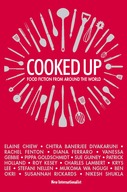
Book Review: Cooked Up: Food Fiction From Around The World, compiled by Elaine Chiew


When Rachel Fenton asked me if I'd be willing to review Cooked Up: Food Fiction From Around The World, I had my doubts - not about reviewing a book featuring Rachel's work, because I already knew what a fine writer she is, but because I don't boast strong credentials when it comes to the culinary arts. I can cook, if it's simple and straightforward and repeatable, but I am neither gourmet nor gourmand.

But it turned out that my failings on this score didn't matter. The food in most of these stories is an enabler of story, serving to bring characters together or push them further apart, and it was the one piece in which food was front and centre that seemed a little out of place among the rest of the stories.

As befits a New Internationalist anthology, the range of authors and countries represented is wide. The anthology starts with a short-short (a "stoku" - story + haiku) by Ben Okri, which didn't grab me at first but which I like more on re-reading, and then traverses continents and cuisines before ending with a story by the compiler of the book, Elaine Chiew.

My favourite stories in the anthology include:

Krys Lee, "Fat" - a young man's efforts to get out of military service through overeating reach an ironic conclusion
Chitra Banerjee Divakaruni, "Mrs Dutta Writes A Letter" - probably my favourite story in the book, a moving story of an elderly woman's emigration from India to the US to be with her children, and the difficult adjustment that confronts her
Rachel Fenton, "Food Bank" - a sharp-edged relationship tale which showcases the author's ability to pack a lot of story into a limited space through drawing out the implications of her characters' behaviour
Elaine Chiew, "Run of the Molars" - not a million miles away from "Mrs Dutta Writes A Letter", but seen from the perspective of the children who must deal with the visit of the elderly relative from home.

There's a lot of other very good stories in here, and the anthology as a whole is definitely worth reading. (I was slightly puzzled by Diana Ferraro's piece, which appears to be a non-fiction discussion of changing times and changing foods in her Buenos Aires - but maybe there is a metafictional element here too subtle for me to notice!)

This anthology is well worth your time.

02 June 2015

Interstellar Award Shortlist plus this week's Tuesday Poem

I got the very welcome news yesterday that my poem "Kraken" has been shortlisted for the Interstellar Award for Speculative Poetry.

There are some fine poets on the shortlist, including two poets represented in The Stars Like Sand: Australian Speculative Poetry: they are P. S. Cottier, my co-editor on the anthology, and Kevin Gillam. Congratulations to Penelope, Kevin, and everyone else shortlisted!

In other news, I'm the overall editor for the Tuesday Poem blog this month, so I won't be posting Tuesday Poems here during June. The Tuesday Poem this week is "Chernobyl Wedding, 1986" by Naomi Guttman, selected by Eileen Moeller: http://tuesdaypoem.blogspot.co.nz/2015/06/a-poem-by-naomi-guttman.html

26 May 2015

Tuesday Poem: Lot 165, by Marty Smith


No one has come to look at my teeth.
Flies licking the weep of my waxy lashes.

‘The heavy horses are quiet fortresses.
Dependable,’ the grandmother huffs,
settling on her knotted legs. She feels my tendons.
Her perm from the Swan Lake Hair Salon.
To her floral blouse, matching pleated skirt
I appeal, I try not to creak.

She means cart-horses and draught horses.
Those horses pull wagons, not race for Sheiks.
If she knew her history.
I’m a light-boned Arab, my pedigree
goes right back to Saladin. I carried Sultans,
we ran rings round Crusaders on big heavy horses
to haul big clanking knights. We left those horses for dead.
I’m looking right at her, carrying my gift from the past.
For the want of a nail.
I make my eyes soft and sharp.

‘Getting old,’ she says. ‘Maybe time for cat food.’
She’s looking for heart room, I breathe out dark red air.

She could carry me in her arms.
She could bed me down in straw.
I’m near to my knees, pleading.

Credit note: "Lot 165" is from Marty Smith's collection Horse with Hat and is reproduced by kind permission of the author. Horse with Hat is available from VUP.

Marty Smith says: Horses have large round eyes like billiard balls set in the sides of their heads, which means they can see behind for danger. So the horse might as well tell the story of the long relationship between men and horses, in which horses always end badly. The poem also takes a gentle poke at the way horses are often represented in a mawkishly sentimental way.

Tim says: I've been nervous around horses ever since John Meredith's fifth birthday party. John lived along Glengarry Crescent from me. The feature of his fifth birthday party was a large and placid horse in the back garden, on which the partygoers were offered rides. When my turn came, I lasted partway round the ride before sliding off the back of the horse and falling to the ground - and though I have since ridden horses without repeating that indignity, I have never quite conquered those early nerves. So I am glad to present a poem seen from the horse's point of view, from a poet with infinitely more confidence around and knowledge of horses than I - and a wonderful ability to express that in her poetry.

The Tuesday Poem: This week, I'm the Hub Editor, and the poem I've chosen is How They Came To Privatise The Night by Maria McMillan.

19 May 2015

Tuesday Poem: A Left Hook, by John O'Connor; In Memoriam John O'Connor


David Howard has alerted me to the sad news that Christchurch poet John O'Connor died recently. I didn't know John well, but I enjoyed talking with him when I was in Christchurch, and he kindly gave me the opportunity to feature his poem Johnny as a hub Tuesday Poem. It comes from his 2013 collection Aspects of Reality (HeadworX).

A few years earlier, I'd published John's poem "A Left Hook" on this blog, and I'm republishing it today as a tribute to John. In 2013, John made his own selection of his poetry available online, and an adapted version of his bio from that site is below:

John O’Connor was a Christchurch poet and critic. He was co-winner of the open section of the New Zealand Poetry Society International Poetry Competition in 1998 and winner of both the open and haiku sections of the same competition in 2006. In 2000 his fifth book of poetry, A Particular Context, was voted one of the five best books of New Zealand poetry of the 1990s by members of the NZPS. He was an editor for Canterbury Poets Combined Presses and was founding editor the poetry magazine plainwraps, co-founder of Sudden Valley Press and Poets Group, occasional editor of Takahe, Spin and the NZPS annual anthology. 
He was a past chair and long-term committee member of the Canterbury Poets Collective. His poetry has been widely published and is represented in Essential New Zealand Poems (Random House/Godwit, 2001). His haiku have been internationally anthologized and translated into eight languages. In 1997 he received an Honorary Diploma from the Croatian Haiku Association and in 2001 a Museum of Haiku Literature Award, Tokyo, for “best of issue” in Frogpond International, a special issue from the Haiku Society of America, featuring haiku from 52 countries and language communities.


A Left Hook

an early experience
of the left hook (admirably

tight if open-handed) came
at the beatific hand of

Monseigneur O'Dea - too
old to be a parish priest - who

about to impart the very
body & blood of Christ found I

was not holding the paten
correctly. a few years later

an equally irascible boxing
coach imparted impeccable

advice on how to throw it,
though he didn't know the bit

about feinting with Jesus.
when the good monseigneur

had his final photo taken
he bestowed a copy on our family

- old friends should be so blessed -
for a decade it sat on the mantelpiece

between a bunch of plastic grapes
& a glass bowl that snowed if shaken.

This poem is from John O'Connor's recently published Cornelius & Co: Collected Working-Class Verse 1996-2009 (Post Pressed, Queensland, 2010), which I also reviewed.

The Tuesday Poem: This week's poem is Albert Park by Alice Miller, a finalist in this year's Sarah Broom Poetry Prize (won by Diana Bridge).

13 May 2015

New Zealand Poetry: Is It A Metropolitan Closed Shop?


As I blogged about last week, I was the guest reader at Hawke's Bay Live Poets on Monday night - and I had a great time! A number of people who had heard me read (and whom I had heard read) at the first New Zealand Poetry Conference held in nearby Havelock North in 2013 took part in the evening, plus many people I hadn't met previously.

The evening, compered by my welcoming and generous host Bill Sutton, started with a very high-quality open mike session - poems by turn moving, thought-provoking, and in at least one case absolutely hilarious. After the break it was my turn, and after a bit of a slow start - I hadn't read for quite a while, and it showed at first - I got more and more into it, and judging by the reaction of the friendly audience, they did as well - so I ended up feeling very pleased with how the night had gone.

Talking to people during the break and after the reading, I was reminded of my experience in 2011 when I was a guest at the Readers and Writers Alive! Literary Festival in Invercargill: in both Invercargill and Hawke's Bay, I met and heard writers whose work was clearly good enough to be published in magazines and anthologies and collected in book form, but who didn't think it was a realistic ambition for someone in their position to break into what they saw (not inaccurately, in my view) as the Wellington/Auckland literary axis.

The success of poets such as Marty Smith make it clear that this can in fact be done; but (I suspect) from the non-metropolitan parts of New Zealand, the "mainstream" of New Zealand literature seems like one cosy club where everyone knows and publishes everyone else, and which sets a high bar for 'outsiders' to jump. The reality might look different to those who live in the cities - in Wellington, for example, there are distinctly different, although sometimes overlapping, International Institute of Modern Letteres (IIML) and non-IIML scenes - but I suspect this view is more true than many of us would care to admit.

The 2013 New Zealand Poetry Conference, which Bill played a key role in organising, helped to break down those barriers: I hope and expect that the New Zealand Poetry Conference 2015, to be held in Wellington in November, will include poetic voices from across the country, and not just end up as another metropolitan talking shop.

05 May 2015

Awwwright, Hastings! Here's One From The New Album!


Where: Hastings Community Arts Centre, 106 Russell Street, Hastings.

When: Monday 11 May, 7.30pm

What: I'm the guest reader  at the Hawke's Bay Live Poets' Society monthly meeting.

Contact: Bill Sutton, phone 06 844 4196, email suttb70 (at) gmail.com

Last year, I went to see Neil Young and Crazy Horse play at the Queen's Wharf Events Centre in Wellington. Knowing that Neil Young + Crazy Horse = the rockers, not the folkie stuff, I went along expecting powerchords, guitar solos, and feedback - and that's what I got (barring a short acosutic interlude in the middle).

But (when I could hear at all) I was amazed to hear people around me complaining "Why isn't he playing the hits? Where's A Man Needs A Maid? Where's Lotta Love?"

If this happens even when an artist is playing old but lesser-known material, imagine what it's like for the long-established band, going out on tour yet again, that tries to play material from its new album. Nobody wants that shit - they want the hits from twenty years ago! Sleater-Kinney seem to have avoided this in their recent reunion tour, but for most rockers of a certain vintage, the gap between musicians' expectations and audience reaction must be hard to take.

I may be ageing, but I'm not a rock star - what are those three preceding paragraphs even about? So when I read at the Hawke's Bay Poetry Society next Monday, I'm going to try out some of the new poems I've been writing this year - along with some poems that have been knocking around the "set" for a while.

I attended the first New Zealand Poetry conference in Hastings in 2013, and found the Hawke's Bay poetry audience to be knowledgeable and appreciative, so I'm not too worried about their reactions to "the new stuff" - though I can always distract them by stabbing a Hammond organ with knives: